24 Things You Didn't Know About Carl Friedrich Gauss
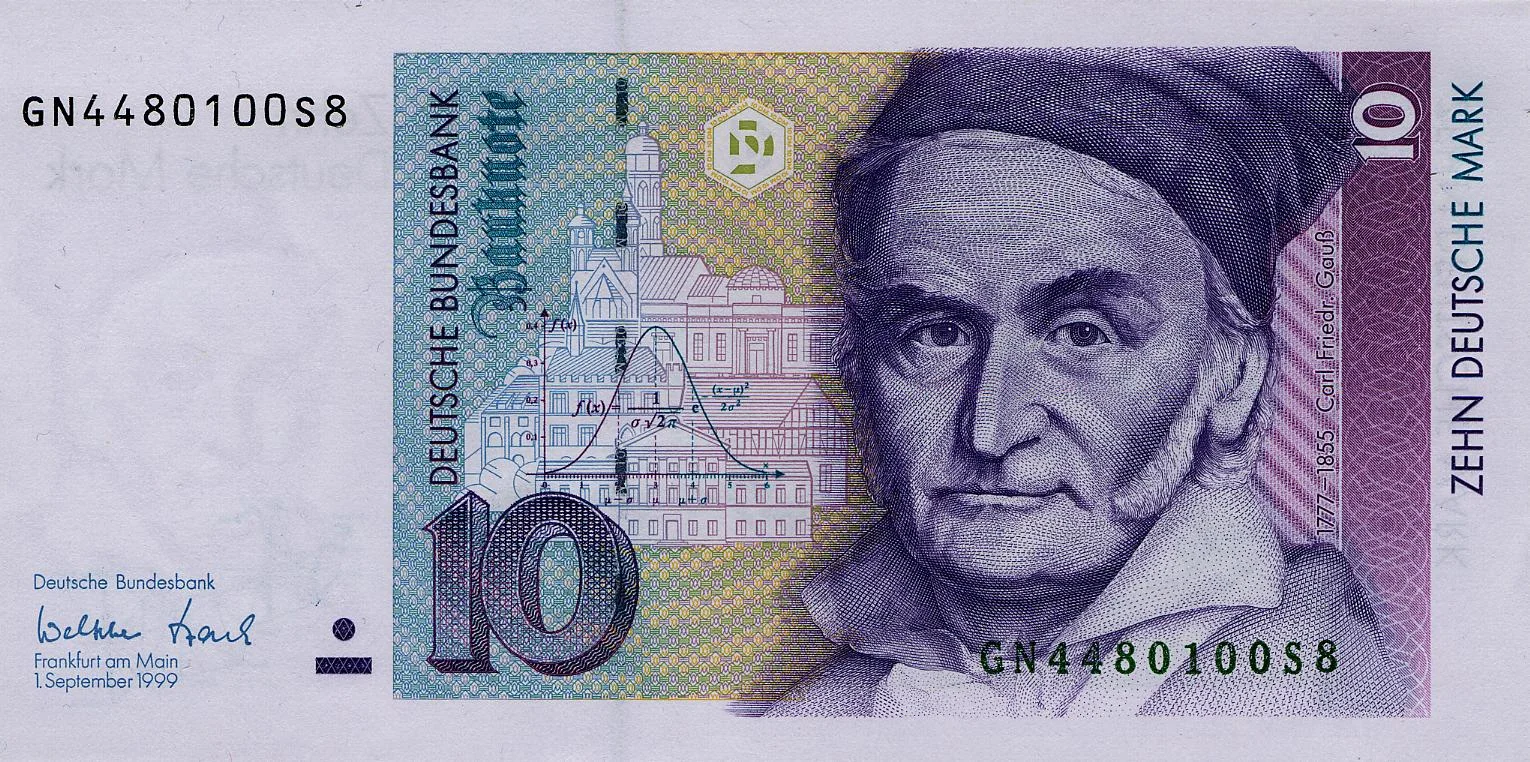
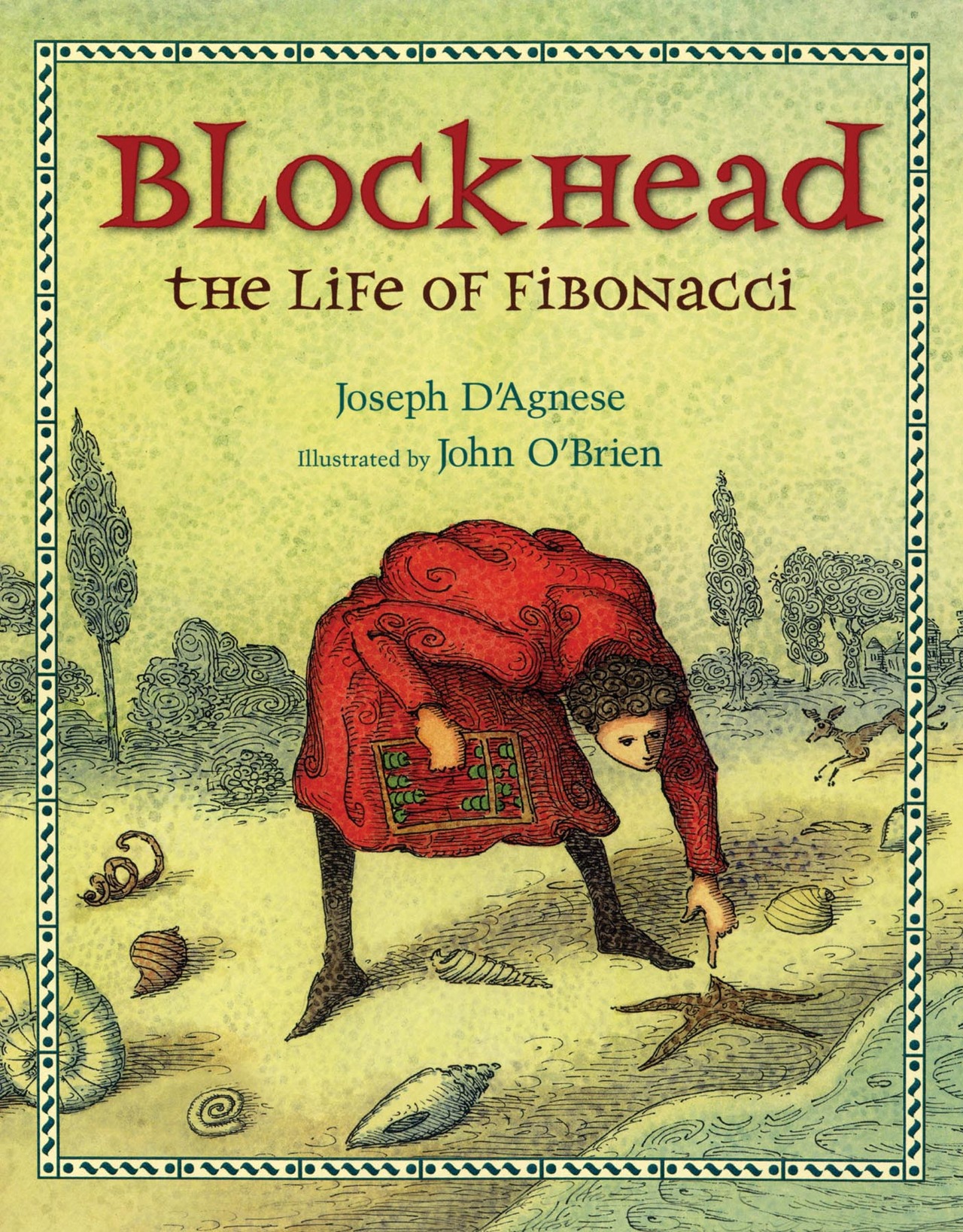
I don’t talk about this much, but the follow-up to my 2010 book on Fibonacci was supposed to be a picture book biography on the life of the German mathematician, Carl Gauss.
My publisher actually “bought” the book, accepted my manuscript, and paid me the first half of my advance. And then years later, they backed out of the entire deal, claiming the children’s book market had “changed.” Because of that series about the boy wizard, parents were no longer buying their kids “baby books.”
So I was SOL. They allowed me to keep the advance. And I now have a bone to pick with J.K. Rowling the next time we meet.
Years ago, I compiled a handwritten list of notes after reading two serious, grown-up books on the life of Gauss. What did I learn about this brilliant man? Plenty, but it was the odd little things that stayed with me. I made a list of his quirks, likes, and dislikes. Here they are.
• He smoked a pipe.
• He liked wine.
• He often wore a little velvet cap. (See the above image of him on former German currency.)
• He calculated the date of his own birthday because his mother forgot when he was born.
• He liked songs and kept a list of his favorites in a little notebook.
• Gauss was married and widowed twice. He really loved the first wife; the second, not so much.
• His name is a unit of measure.
• He figured out a way to draw a 17-sided polygon.
• He added all the numbers from 1 to 100 as a kid—maybe.
• His father, who was a mason, was an angry, violent man; perhaps as a result, the adult Gauss hated violence.
• Gauss read newspapers voraciously; students called him "the newspaper tiger" because he pounced on any papers they left unattended.
• His collected works fill 12 huge volumes.
• He invented one of the first telegraphs used in Germany!
• He died richer than a professor should have because he hoarded pennies like a miser.
• He probably knew the Brothers Grimm.
• He had lovely penmanship.
• He hated teaching, and believed some students robbed him of his time.
• He hated when students took notes in class; he told them to listen instead.
• His portrait used to be on German currency before the coming of the euro.
• He was called the "Prince of Mathematics" in his lifetime; he had no problem with the title.
• He is considered one of the top three mathematicians of all time, along with Archimedes and Newton.
• Two of his sons emigrated to the United States.
• One learned to speak Sioux.
• Another became a millionaire selling shoes in St. Louis.
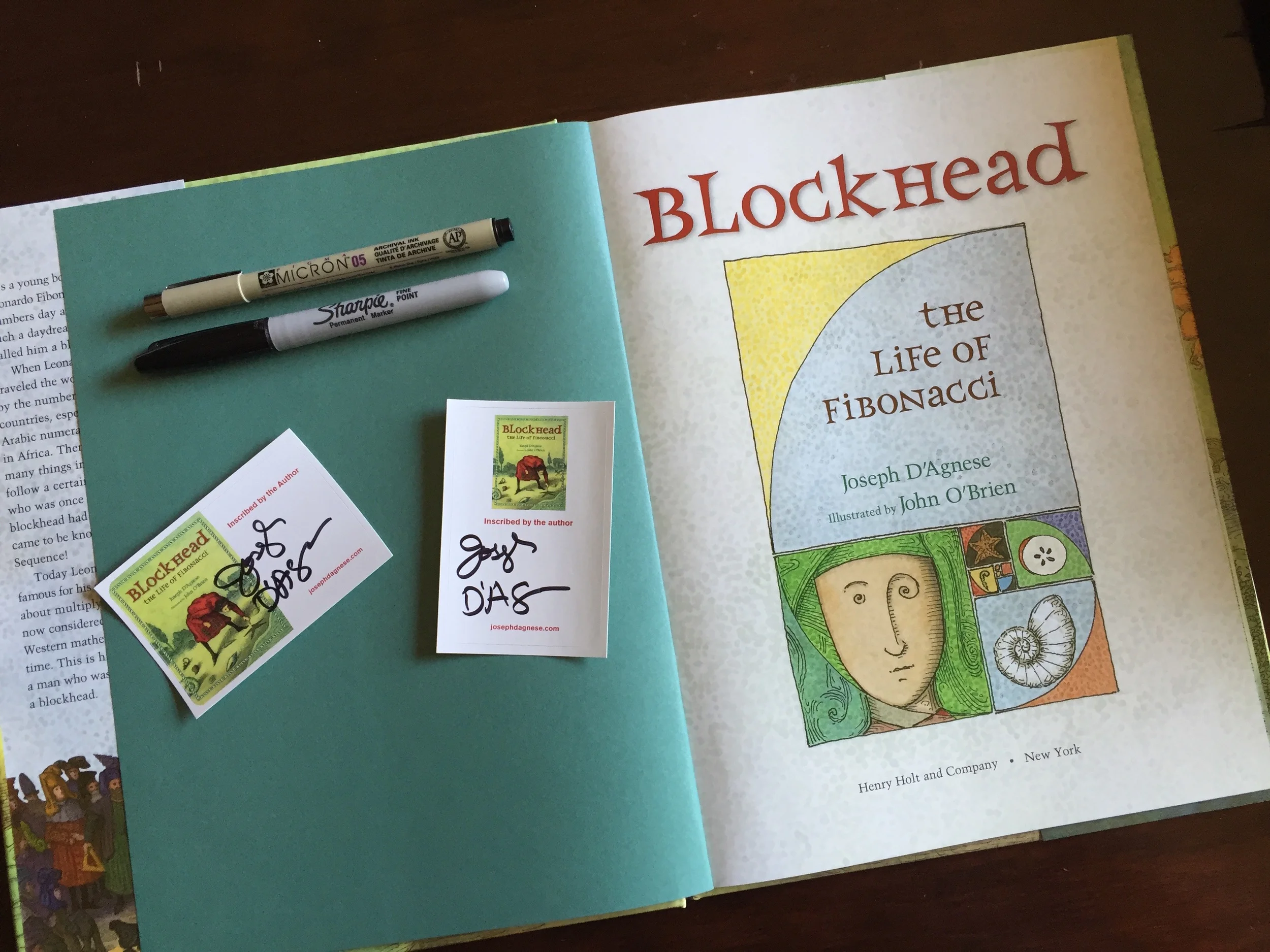
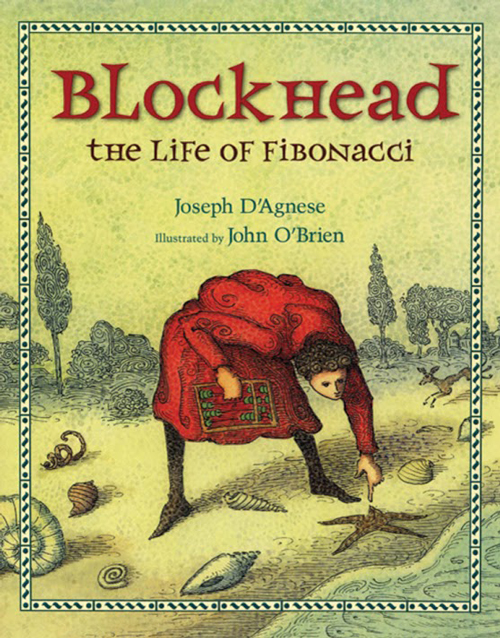
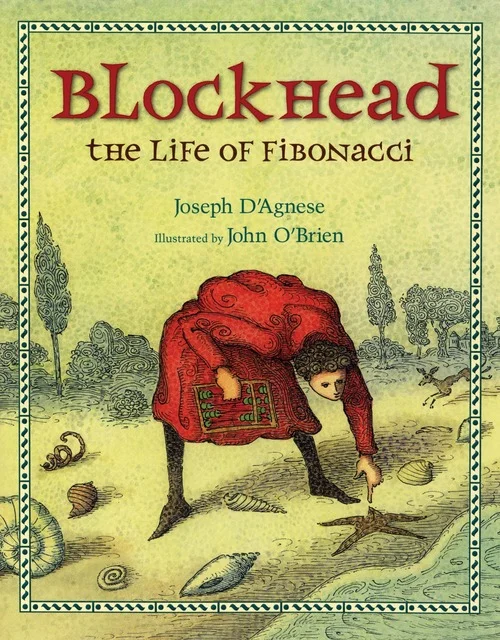
That’s my list! If you’re interested to see how my proposed children’s book series on great mathematicians kicked off, you can always check out my Fibonacci book, which is available in five languages: English, Korean, Japanese, Spanish, and Catalan! (And it is only available as a hardcover.)
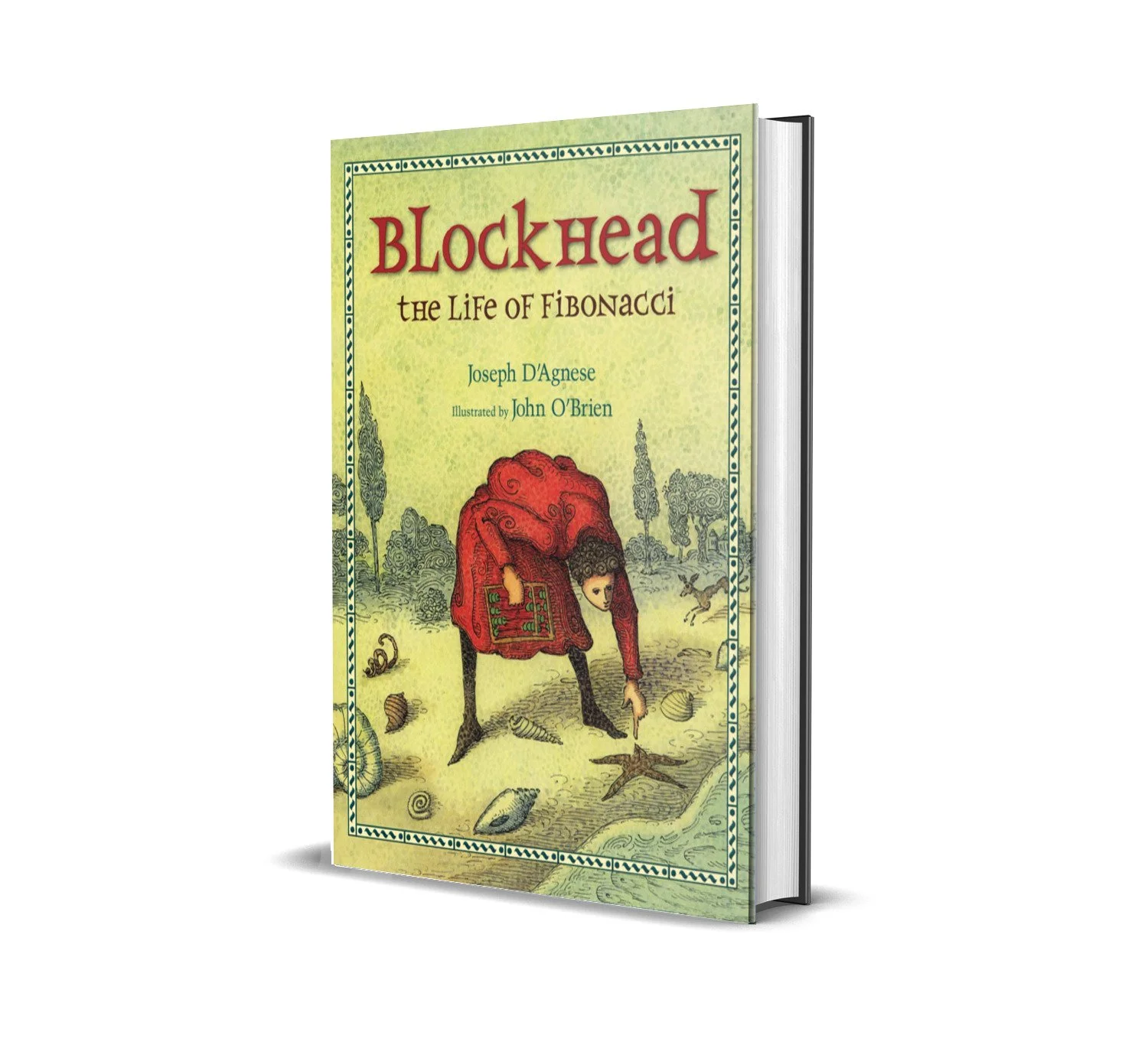
BUY BLOCKHEAD: THE LIFE OF FIBONACCI
Hardcover: Bookshop | Amazon | B&N | Books-A-Million
Autographed: Malaprop’s
All photos by me, except the Gauss currency.
Leonardo Pisano, aka Fibonacci, was one of the greatest mathematicians Europe ever produced. He lived in the Middle Ages. But modern mathematicians never read his work because he wrote in Latin. Latin scholars know nothing about math. And mathematicians don’t read Latin. So while you can go to a bookstore and find tons of classical literature translated from the original Greek and Latin, you are unlikely to find the translated works of Fibonacci, who wrote at least five texts in his lifetime that have survived to our time.
If his work was going to be made accessible to 20th and 21st century researchers, someone would have to translate his work into a modern language. Portions of his output had been translated over the centuries, but a fresh translation would bring his work to greater audiences. That person turned out to be…
I’ve spent an inordinate amount of time in my professional life writing articles about the mathematician Leonardo Fibonacci. Most of those pieces were for math magazines aimed at kids. (I was working at Scholastic when I sold my children’s book about Fibonacci.) Then, many years ago, when I was living in Italy, I wrote about Fibonacci for a short-lived daily newsletter on Italian life and culture.
Both the editor and I were astonished by the response that that tiny story. Either people had never heard of Fibonacci, the Sequence, or the Numbers. Or they knew the name from the world of investing, but did not know about Leonardo himself. That taught me a lesson: Fibonacci’s story is amazing enough to interest adults as well.
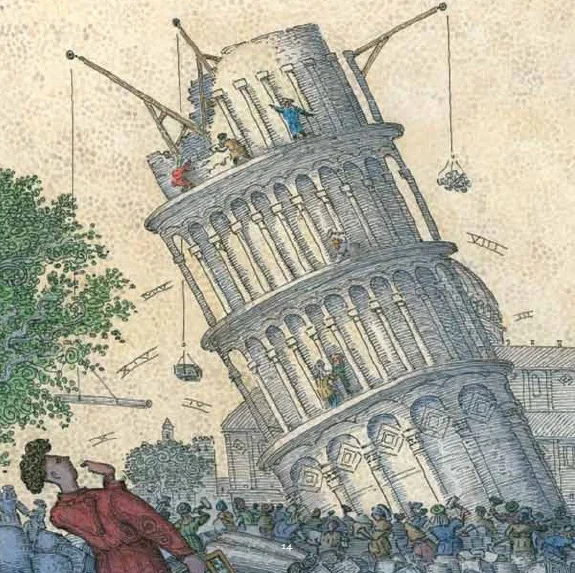
A few years ago I wrote a long post about Fibonacci books…for kids, grownups, and serious math geeks. That post ended up being very long, and I now think it makes more sense to split it up.
To that end, here’s my current recommendations for books for kids about Leonardo Fibonacci and the famous Fibonacci Sequence that bears his name. The list begins with books teachers and homeschoolers can use to the teach the Sequence. Then it moves on to books that will appeal to kids…
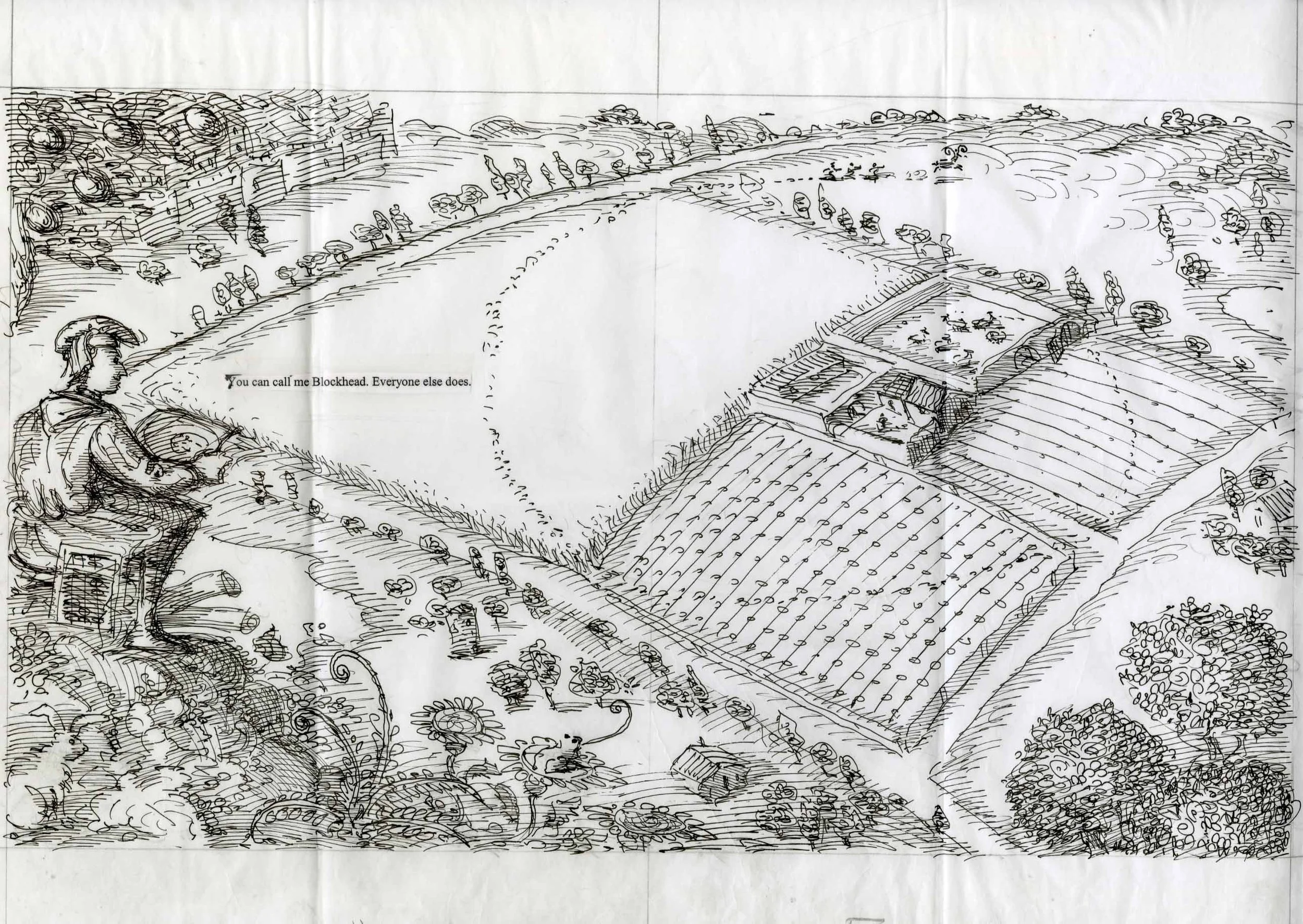
When I meet math teachers at schools or conferences, they assume that I am a lifelong math lover since my picture book is about Leonardo of Pisa, namesake of the Fibonacci Sequence. I should come clean. Math teachers, here’s what I’ve been ashamed to confess: When I was a kid, there was no subject I feared more than math.

I compiled a list of fun facts about this brilliant mathematician after reading two biographies. The oddest little things stayed with me, and here they are…