Best Books About Fibonacci for Serious Math Geeks (aka Mathematicians)
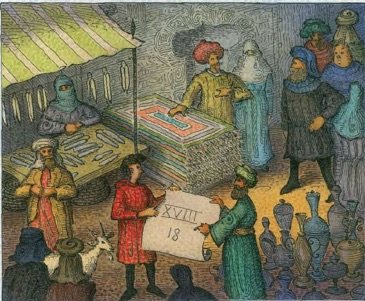
Leonardo Pisano, aka Fibonacci, was one of the greatest mathematicians Europe ever produced. He lived in the Middle Ages. But by the 20th century modern mathematicians never read his work because he wrote in Latin. Latin scholars know nothing about math. And mathematicians don’t read Latin. So while you can go to a bookstore and find tons of classical literature translated from the original Greek and Latin, you are unlikely to find the translated works of Fibonacci, who wrote at least five texts in his lifetime that have survived to our time.
If his work was going to be made accessible to 20th and 21st century researchers, someone would have to translate his work into a modern language. Portions of his output had been translated over the centuries, but a fresh translation would bring his work to greater audiences. That person turned out to be a Bucknell University mathematician named Lawrence Edward Sigler. I don’t know much about him, but he apparently taught himself Latin in order to translate Fibonacci’s books into English.
One of Sigler’s translations, published in 1987, was available around the time I was writing my children’s book about Fibonacci. I was excited to get my hands on the so-called Book of Squares, which may be the third of Fibonacci’s five books (that we know of). I knew the book would be way over my head as a generalist. But it was fun to page through.
Fibonacci wrote his first book, Liber Abaci, in the year 1202. The very first line reads:
“Incipit liber Abaci compositus a Leonardo filio Bonacci Pisano in anno MCCII.”
My high school Latin is just good enough to permit me to scan that line somewhat accurately:
“Here begins the Book of Calculation written by Leonardo, son of Bonacci of Pisa in the year 1202.”
Later, in a short biography, Professor Sigler gave us the only autobiographical sentences Fibonacci ever wrote. They are the key to understanding Fibonacci’s background, his cultural references, and why and how he ended up learning so much about Hindu-Arabic numerals:
I joined my father after his assignment by his homeland Pisa as an officer in the customhouse located at Bugia [Algeria] for the Pisan merchants who were often there. He had me marvelously instructed in the Arabic-Hindu numerals and calculation. I enjoyed so much the instruction that I later continued to study mathematics while on business trips to Egypt, Syria, Greece, Sicily, and Provence and there enjoyed discussions and disputations with the scholars of those places. Returning to Pisa I composed this book of 15 chapters which comprises that I feel is the best of the Hindu, Arabic, and Greek methods. I have included proofs to the further the understanding of the reader and the Italian people. If by chance I have omitted anything more or less proper or necessary, I beg forgiveness, since there is no one who is without fault and circumspect in all matters.
That’s it. That’s all the man ever wrote about himself. Everything else we know about him comes from historical records and knowledge of the history of his times.
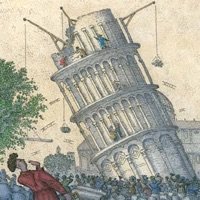
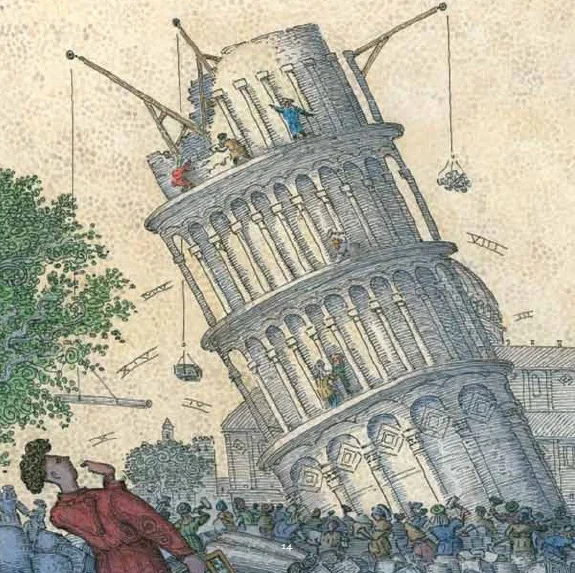
Always Leaning?
Leonardo was probably a boy when workers began building Pisa’s famous tower. The structure began leaning when they completed the third level.
Sometimes I run into laymen who want to know more about Fibonacci.
If they are serious math geeks, I recommend the two books on this list to them.
Honestly, unless you have been trained as a mathematician, you probably would not enjoy Professor Sigler’s translations.
But they are fun curiosities, so I’m listing them here.
I was not going to post images of the covers because they are quite drab, then I changed my mind.
There’s one image attached below. Happy now?
Back story on this series of posts: A few years ago I wrote a long post for this site that shared all my Fibonacci book recommendations…for kids, grownups, and serious math geeks.
That post ended up being very long, so my 2025 strategy is to split that post up.
Here’s the whole series at a glance:
Part I: Best Books about Fibonacci for Kids
Part II: Best Books about Fibonacci for Adults
Part III: Best Books about Fibonacci for Serious Math Geeks aka Mathematicians (the post you are reading)
And if you must, my original list lives here.
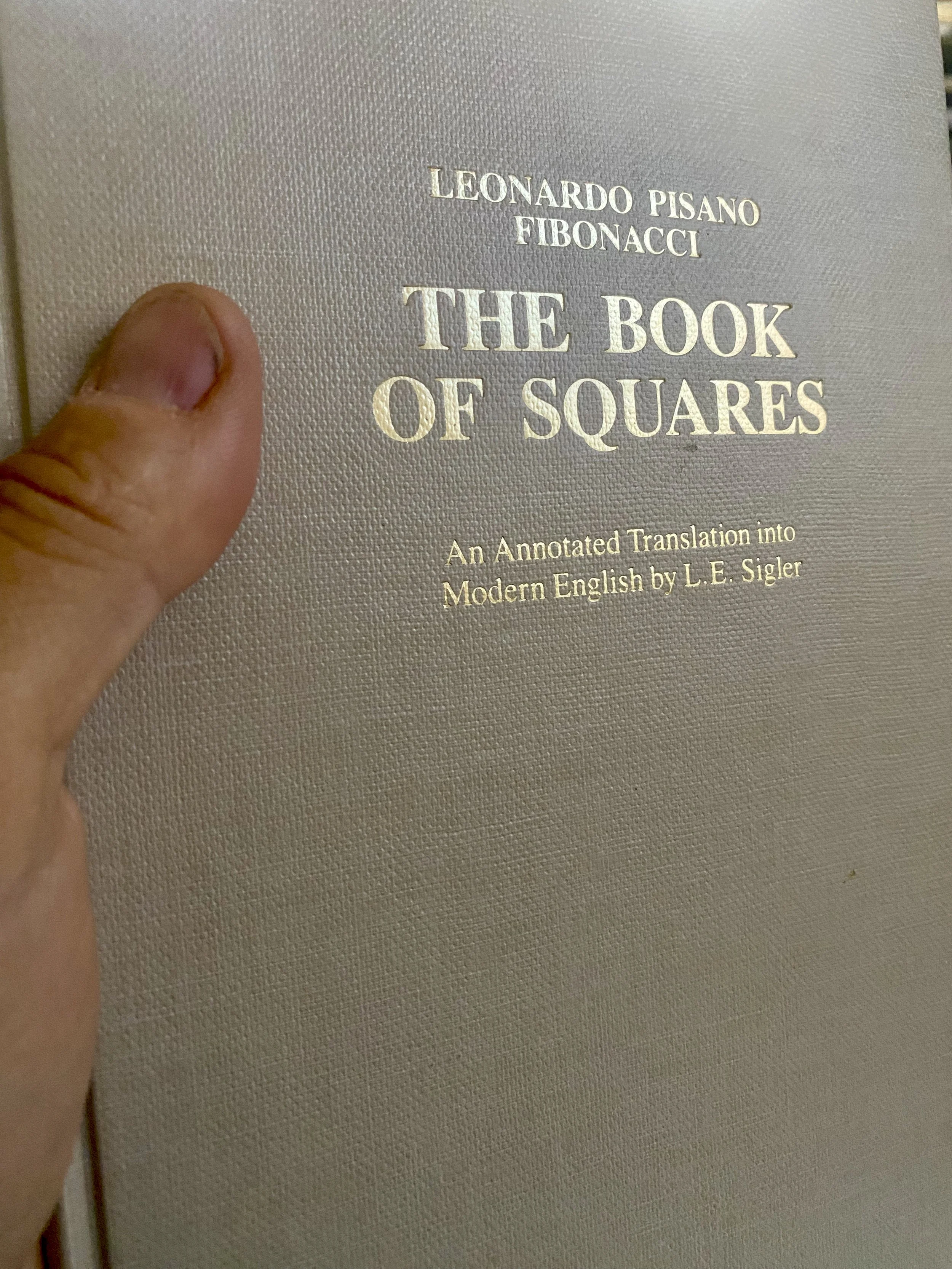
Not Exactly an Illuminated Manuscript
Actual cover of the modern translation of Leonardo Pisano’s book. Snazzy, eh?
These are all affiliate links, so I may earn a commission at no cost to you if you buy anything I’ve recommended.
Currently, both of the books are available. But that may change in the future.
Don’t despair if the one you want isn’t immediately available.
I have great luck locating used and rare books on the following sites: Biblio, Bookfinder, Alibris, Abebooks, and even eBay.
You just have to poke around until you find a copy at a reasonable price.
Joe D’Agnese’s Ever-Evolving Fibonacci Bibliography
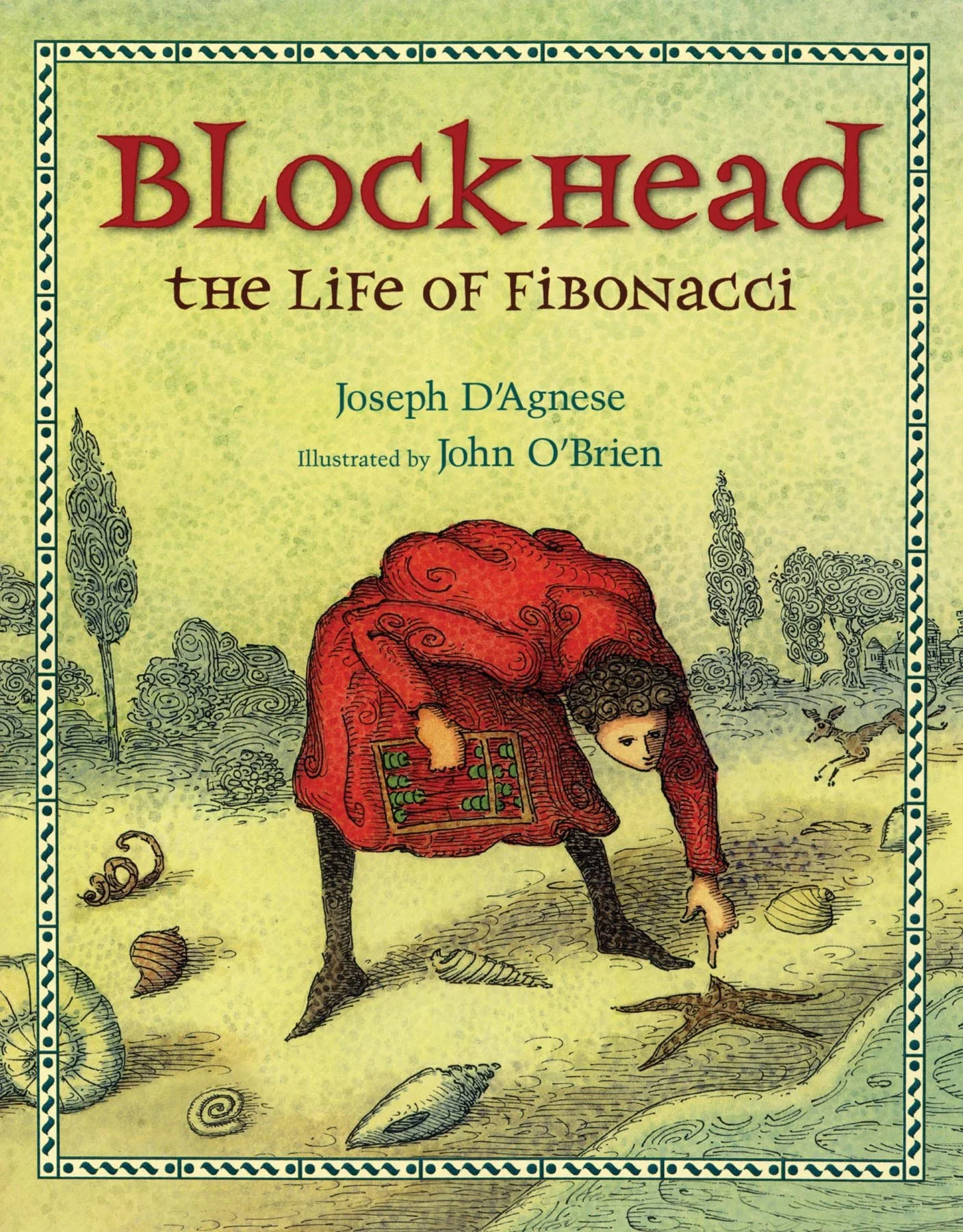
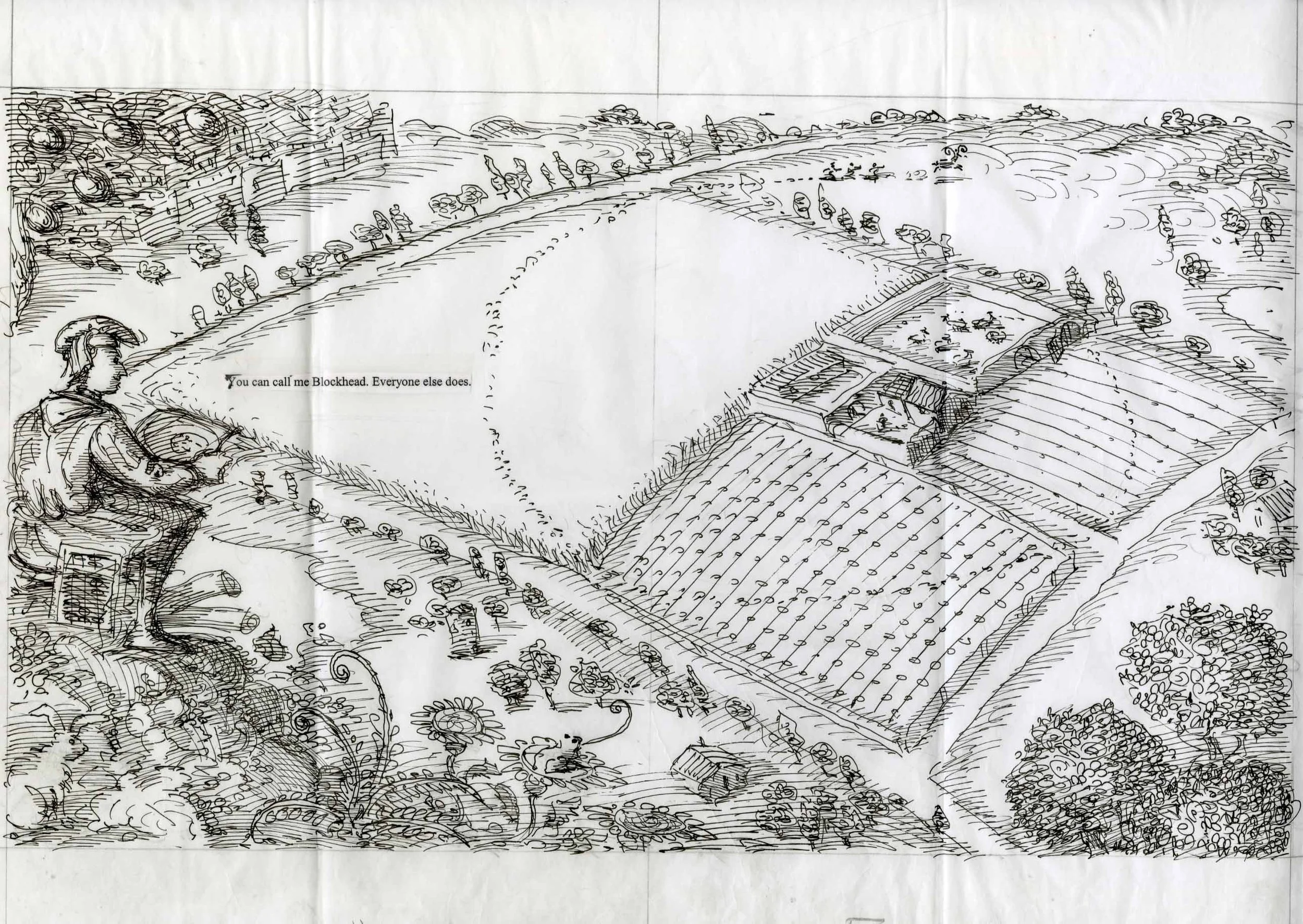
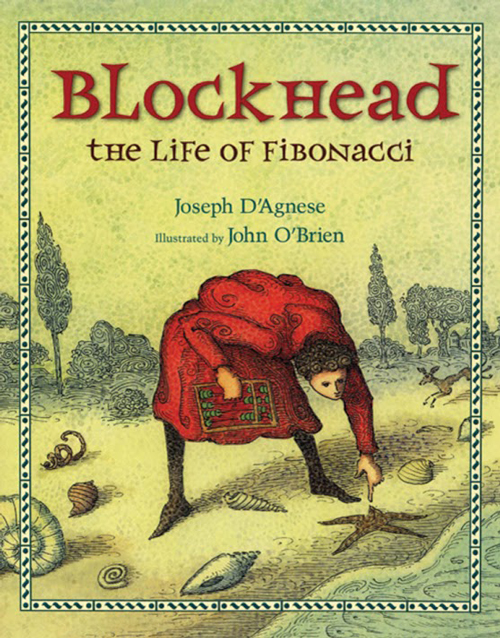
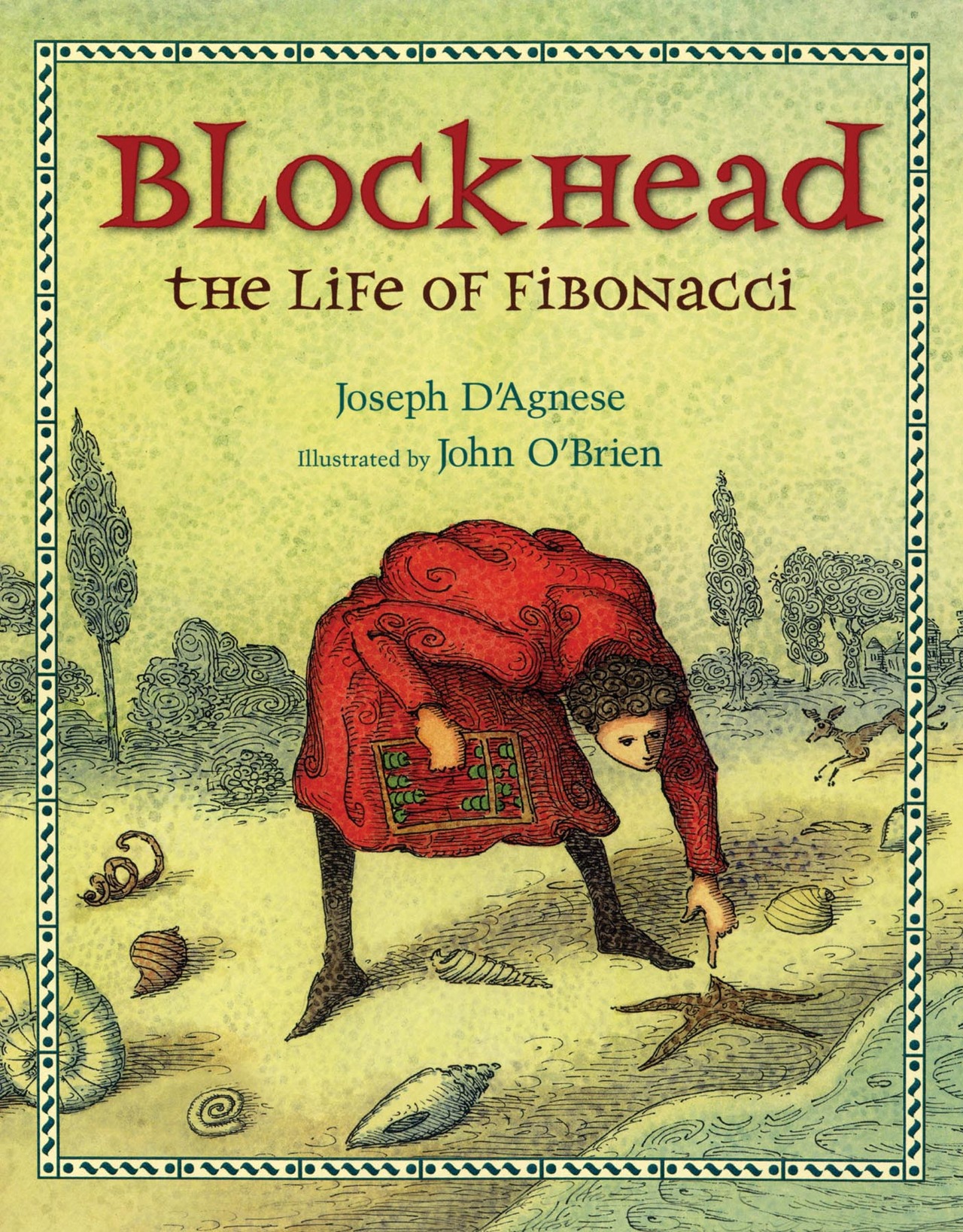
Blockhead: The Life of Fibonacci
By Joseph D’Agnese, illus. by John O’Brien. (Holt, 2010) ISBN: 0805063056
Korean version
DVD
Books by Fibonacci himself: (for mathematicians only!)
Liber Abaci
(also known as The Book of Calculation, or The Book of Numbers), by Leonardo Fibonacci, translated and edited by L.E. Sigler. (Springer, 2003) ISBN: 0387407375.
Liber Quadratorum
(also known as The Book of Squares), by Leonardo Fibonacci, translated and edited by L.E. Sigler. (Academic Press, 1987) ISBN: 0126431302
Thanks for checking these out! Here’s my own book again with some other online retailer links…
BUY BLOCKHEAD: THE LIFE OF FIBONACCI
Hardcover: Bookshop | Amazon | B&N | Books-A-Million |
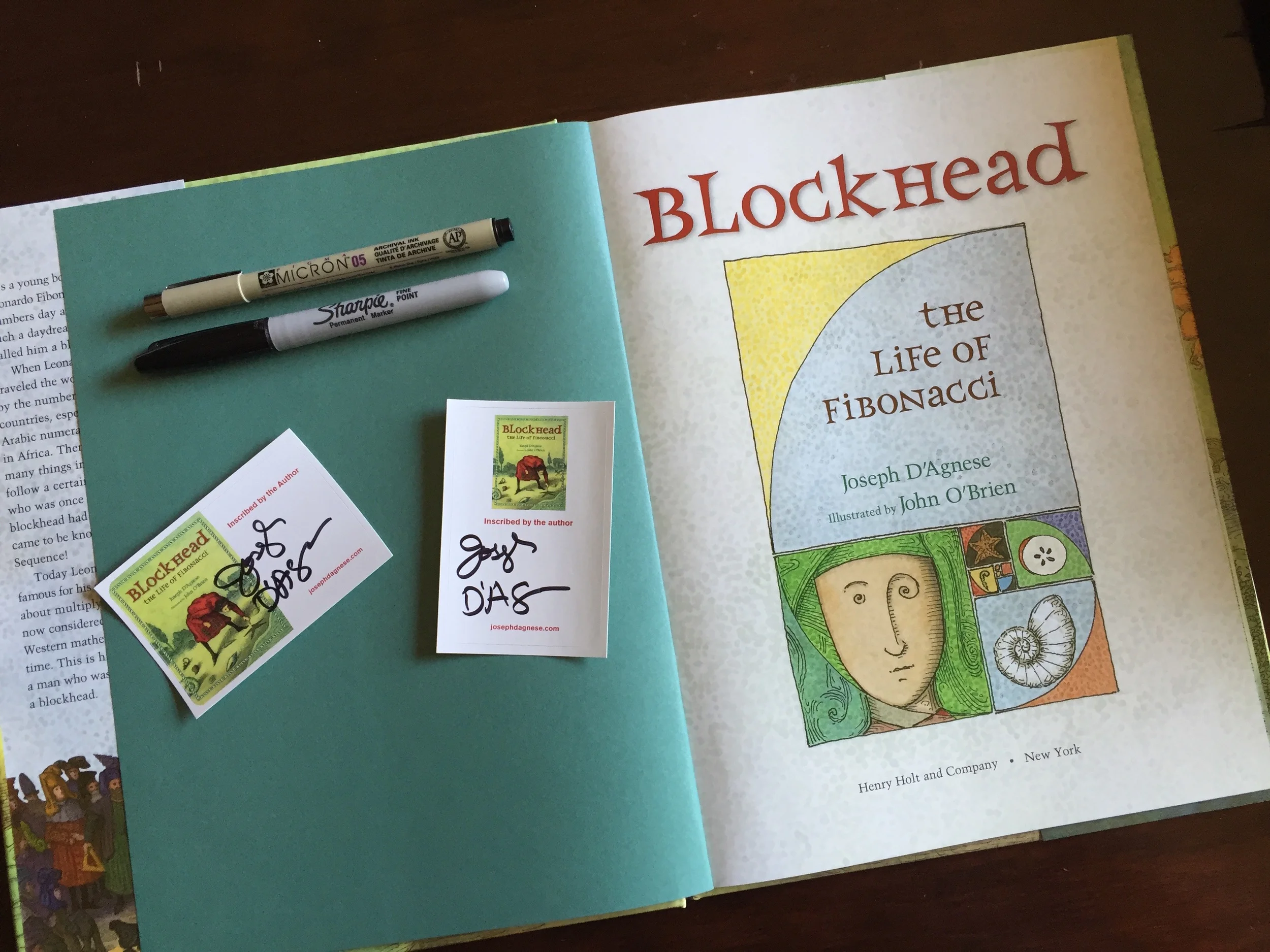
Autographed: Malaprop’s