Selling Books Online: eBay, Amazon, AbeBooks, and More (My Personal Guide)
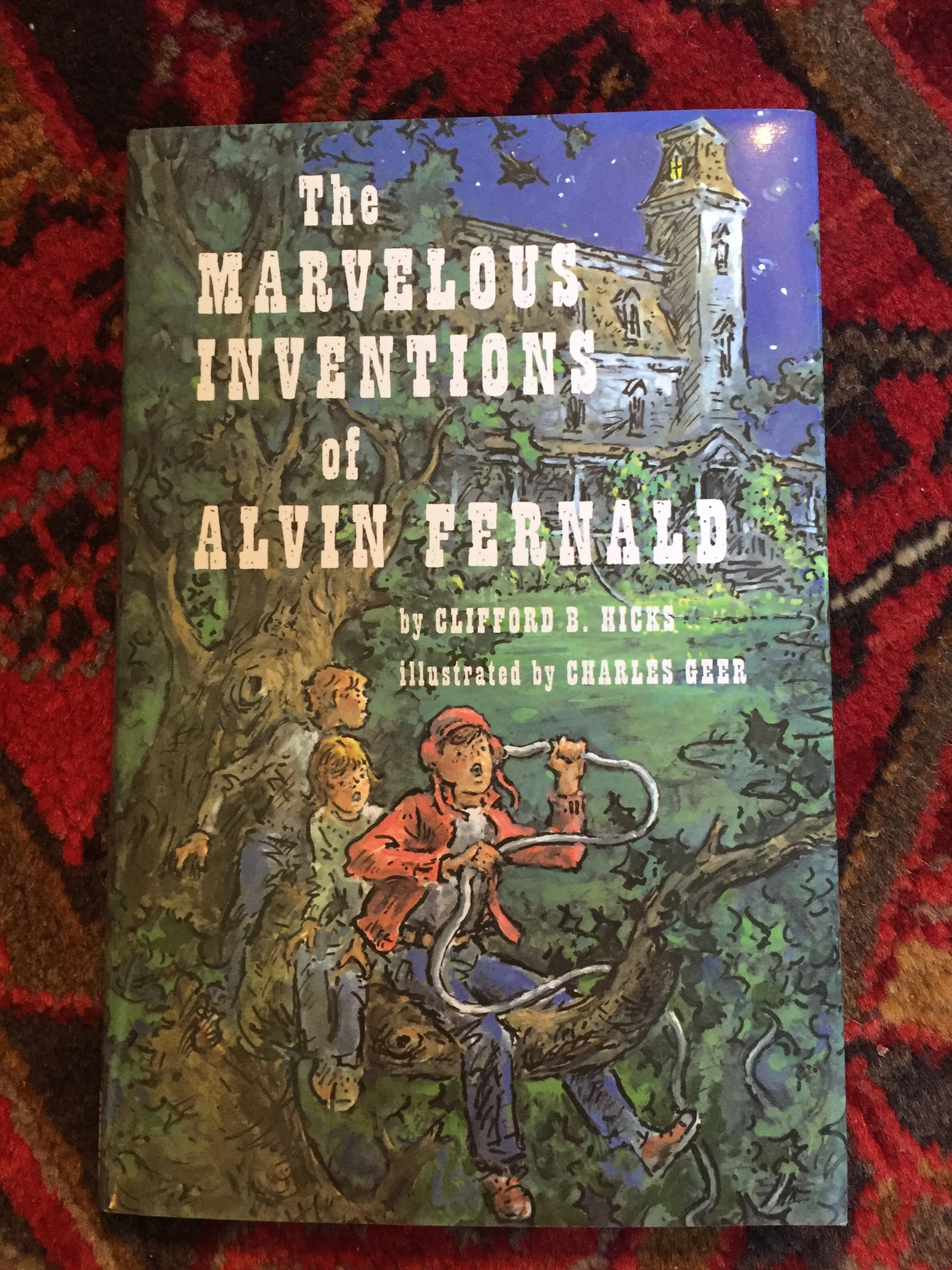
Sometime in 1999, I ran out of space to store my books. I was living in a small apartment and the only shelf unit I had was crammed into my tiny bedroom. It was packed solid with books. I had gone slightly crazy in the previous few years buying books by new-to-me mystery writers. I’d read them all. Some I’d liked, others I didn’t. I kept them all because, in many cases, they had been signed by the authors.
In the past, when I’d run out of space, I had simply packed the books I didn’t want in paper grocery bags or cardboard boxes, and donated them to public libraries or Goodwill.
This time around, I thought I’d try something different. I created an account on eBay, and started listing the books for auction. Back then, eBay was still in its infancy, and it was easy for an autographed book to get noticed by the right people. Most of those books sold in their very first outing. Some needed a slight price adjustment to trigger bidding.
When the orders came in, I packed each book carefully in bubble wrap, and shipped them via media mail at the U.S. Post Office. I worked those visits to the post office into my daily schedule, so they weren’t particularly onerous. By the end of the first year, when I did my taxes, I was surprised that I had sold about $600 worth of books! The next year, I hit $750, but ran out of books to sell.
A few years later, I drastically needed to purge. I was married by then, and we had lugged my books and Denise’s to North Carolina, and realized we needed to clear out some of them or we’d never organize our basement TV room the way we wanted to.
This time, in addition to selling on eBay, I created a Seller Central account on Amazon, and sold used books via their so-called marketplace. I sold household items too—extra cookie sheets and Pyrex dishes that seemed to multiply on their own in our kitchen cabinets.
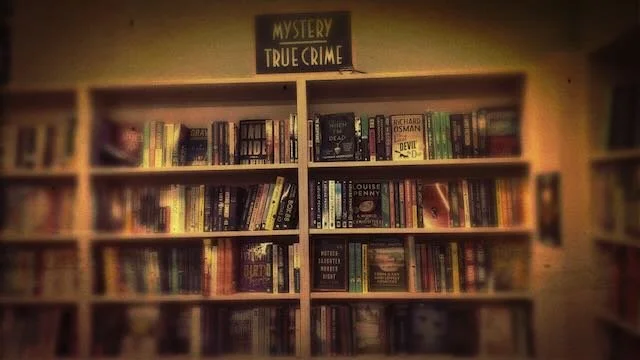
These two experiences came back to me recently when I visited a small bookstore in North Carolina that was run by a nonprofit literacy program. The store subsisted on book donations. What they didn’t sell in the shop, they sold online. And a lot of rare or unusual books passed through their hands, bringing with them a chance to make a decent profit online.
I haven’t sold books online in a while. A few years back, we tried purging our possessions using Marie Kondo’s method, but we could not bear to part with our books. It’s complicated: these days many of the volumes on our shelves were signed by friends of ours. The more writers we meet, the more the books mean to us.
But I started thinking: If I were selling books again, where would I sell them? Here’s a quick list, and my knee-jerk thoughts about each:
eBay:
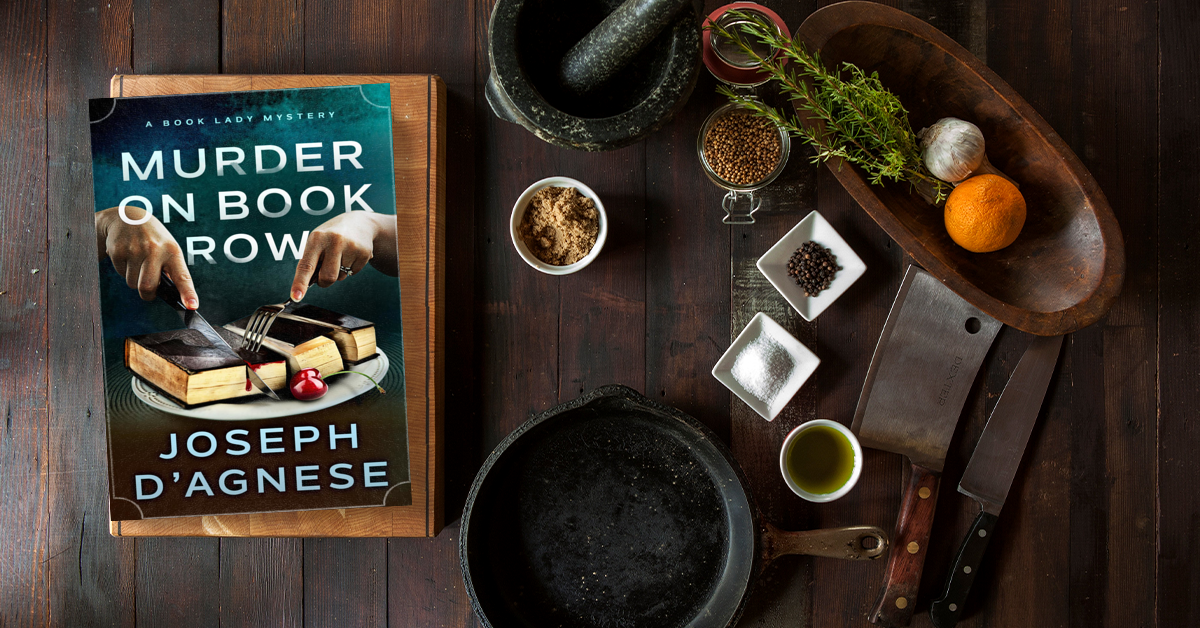
An oldie but a goodie. There’s no quicker way to reach people who shop than this platform. All my indie-published novels are up for sale on eBay. It just seemed like a smart thing to do. I mark up the price slightly over retail because I offer them autographed. These days eBay allows you to set a fixed price, not run an auction, so the book is permanently for sale. (The “Buy It Now” button was not an option for sellers when I first started selling in the nineties.) These days, the market is far more crowded, and discoverability is tougher. You need a lot more photos than you think to persuade readers or collectors that they are getting a decent product at a fair price.
Amazon Seller Central:
Still a great choice to sell used books. When you list a book, your offer appears on a book’s detail page in the section just below the Amazon-fulfilled prices. See this section that unfolds when you click “Other Used, New, Collectible”?
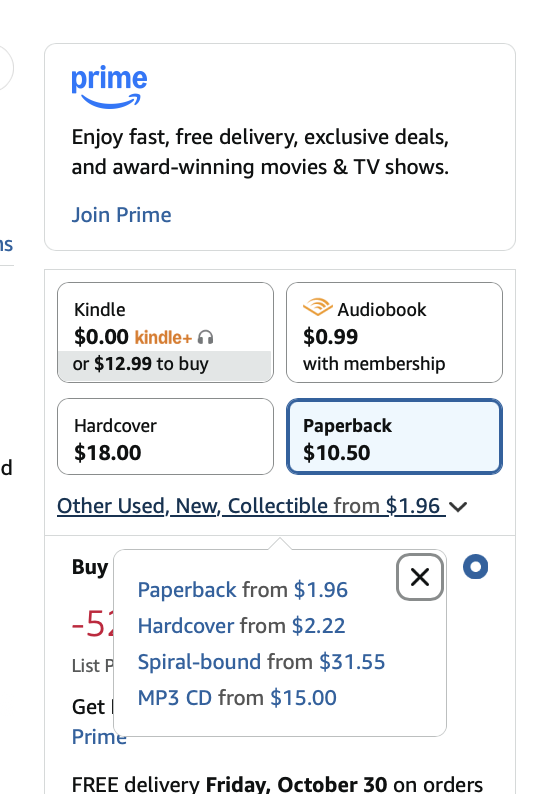
If you scroll down slightly, you’ll see another reference to books offered by resellers. See this section under the Add to Cart/Buy Now buttons? This allows buyers to simply choose a used book that is cheaper than the new, full-price one Amazon is selling.
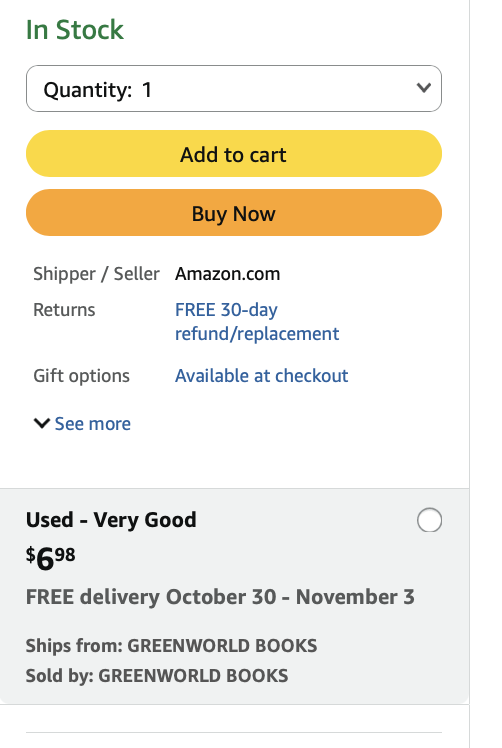
It gets tricky if you are selling a rare or out-of-print book. Placing a book in the “Collectible” category requires Amazon’s approval. Because of this, I never used Seller Central to sell autographed books. (I used Alibris instead.)
It’s also tricky if the book you’re selling is an oddball that isn’t already in Amazon’s system. The book may not have an existing “detail page.” You are essentially creating the detail page by offering that book for sale. Most sellers don’t do this very well. Their descriptions and photos look unattractive, and they don’t give all the important details—trim size, publication date, condition, whether the book has a dust jacket or not, and so on. To make matters worse, since their book is the only one in the system, they get greedy and set a price that ensures that the book will never sell. If you have an unusual book to sell and you are using Amazon Seller Central, get all your facts straight and use the best photos you can possibly take. Price intelligently.
How to Choose Your Price:
Before you list a price for any book, it makes sense to check current prices at Bookfinder, which is a search engine that pulls book prices from many different sites online. The chief problem with Bookfinder is that it is owned by Amazon, so the cheapest books in your results are almost always found on Amazon. The site is still valuable for giving you a decent idea of the range of prices, but take them with a grain of salt. If you are concerned about using an Amazon-controlled search engine, then take the time to research prices on each of the sites I mention in this post to arrive at a viable price range for the item you’re selling.
Alibris:
Alibris sells books and different types of media (movies, music, audiobooks). It’s privately held, which means that it has not been gobbled up by the ‘Zon. In the past, I used it to list all my older, out-of-print books, and managed to sell quite a few of them at amazing prices. (For many years, I collected signed hardcovers by James Ellroy, and was able to sell an extra signed copy I had of L.A. Confidential to a collector for a whopping $500!) That never happened again, but at the time it was a nice test of Alibris’s reach among collectors. As on Amazon, the vast majority of books being sold are dime-a-dozen paperbacks and hardcovers, so your Alibris interface can be set to automatically trigger price decreases if the system feels the market warrants a drop. You don’t want this to happen if you are offering rare, out-of-print books, so make sure you have disabled the automatic price-setting feature.
Thriftbooks:
Easy to create an account as a small bookstore, and as a civilian who just has a few books to sell. I see no reason not to sell on Thriftbooks as well.
Before we go further…
From this point on, things get slightly trickier. A book lover who just wants to sell unwanted books may find these next two options more demanding. They are geared toward professional booksellers. I’m mentioning them because I use them often as a buyer to locate books that simply aren’t available anywhere else.
Abebooks:
At its founding, Abebooks catered specifically to pros who offered used, rare, out-of-print, and antiquarian books for sale. When I tried creating an account here in the early 2000s, I needed to prove that I was a longtime bookseller with a business account and registration. When Amazon acquired the company in 2008, it has become easier for civilians to sell books here. You must still be willing to ship worldwide quickly. And if you’re not on a monthly subscription plan, Abebooks takes a bigger chunk of your earnings. If you’re a bookseller who wants to keep monthly costs low, price your books slightly higher to make up for Abebooks’s commission. Just understand that your book pricing will vary across platforms.
Biblio:
I have never used Biblio to sell books, but I have bought from their sellers numerous times. It’s an excellent way to find old history titles that don’t show up anywhere else. (I am predisposed to love Biblio because they’re headquartered in my hometown of Asheville, NC.) They’re a privately-owned, ‘Zon-less option for moving inventory. Yes, you can sell here if you’re just a civilian who wants to unload extra books, but the site works best for professional sellers who know how to grade books (i.e., describe their condition) and sell worldwide. They only sell books, not music or movies.
Ready for something different?
I started this post because of that small used, nonprofit bookstore I visited. When I left their premises, I could not help think of other ways that they could earn money to fund their literacy programs.
One way small stores can generate an income stream is to create a virtual storefront on Bookshop.org. The site started as an Amazon alternative. When someone buys a book on Bookshop, they’re asked to choose a bookstore in their area that will profit from the sale of the book. Punching in your zip code brings up a list of bookstores in your area. You pick the store you favor, Bookshop fulfills the order, and the store you chose gets a small commission. Nearly every small store I’ve connected with in the past five years has a virtual Bookshop presence. Even though they are not shipping the product out of their own inventory, they nevertheless derive a small income stream on the sale of print books and ebooks. That’s great because historically mom-and-pop stores have not been able to profit on the sale of ebooks.
Bottom Line:
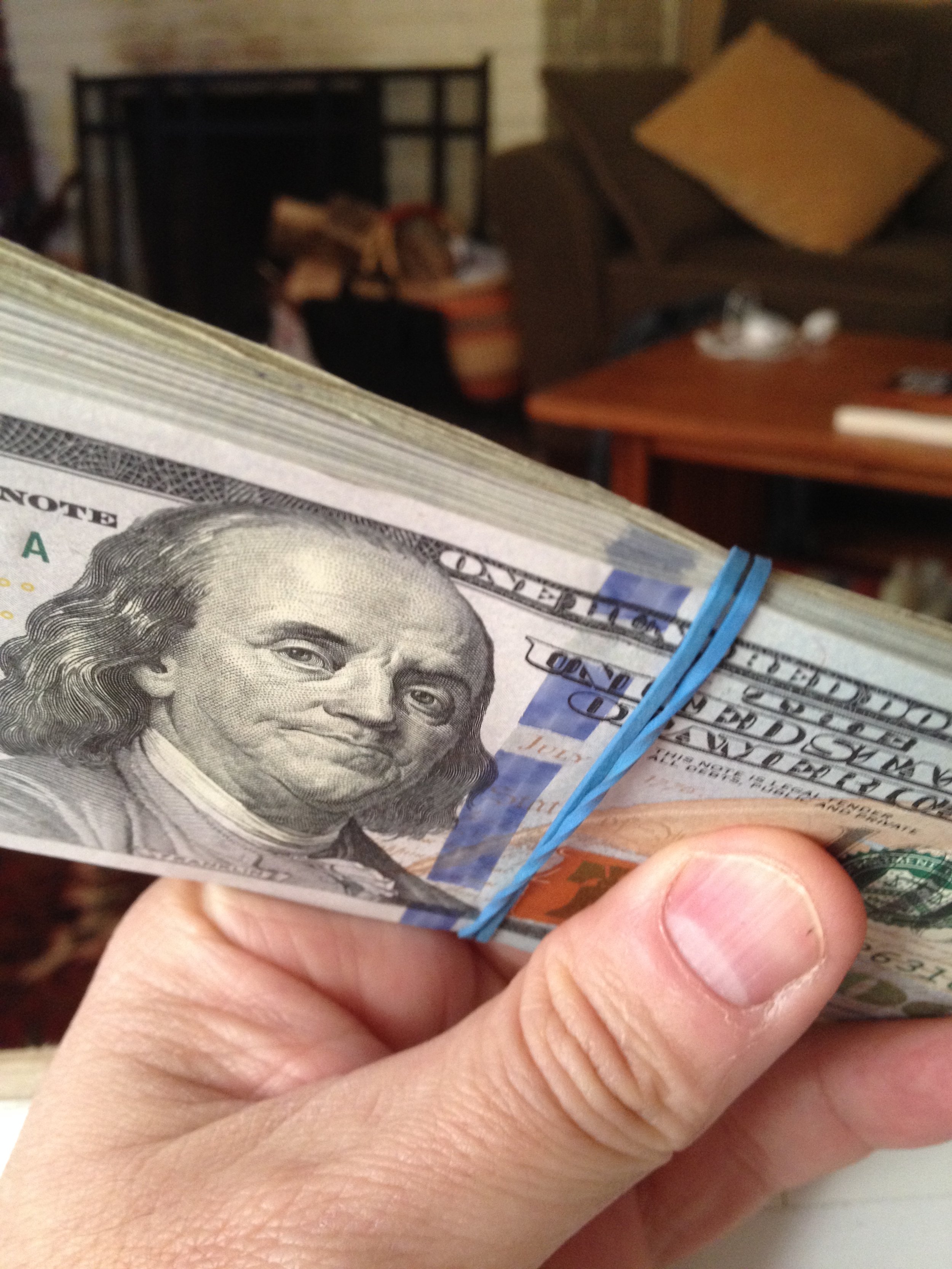
If you’re a heavy reader with time on your hands, you can make some decent money selling your books through any of these outlets. You need to decide: how long are you willing to wait for sales to materialize? If you’re in a hurry to free up space in your home, these outlets may not be for you.
2026 Joe is far more impatient than 1998 Joe. If I want something out of my house, I donate it. It does not make sense to keep a stack of paperbacks around if I can only make $2 each on an online sale. Two stores in our town offer store credit on trade-ins, so that’s quicker.
Occasionally, though, I have a pricier history title that I bought because Denise needed it for research. That type of book is worth selling online because it might fetch $20 or more if it finds the right buyer.
And if you are a small brick-and-mortar store like the one I visited, your inventory should be up and selling on all of the appropriate sites. The only limit is labor; you might need one or two booksellers whose only job is to research prices, and upload photos and descriptions. That’s demanding, but it’s the way that the vast majority of unusual books are sold in 2026.