What Happens to Copyrights When Writers Die?
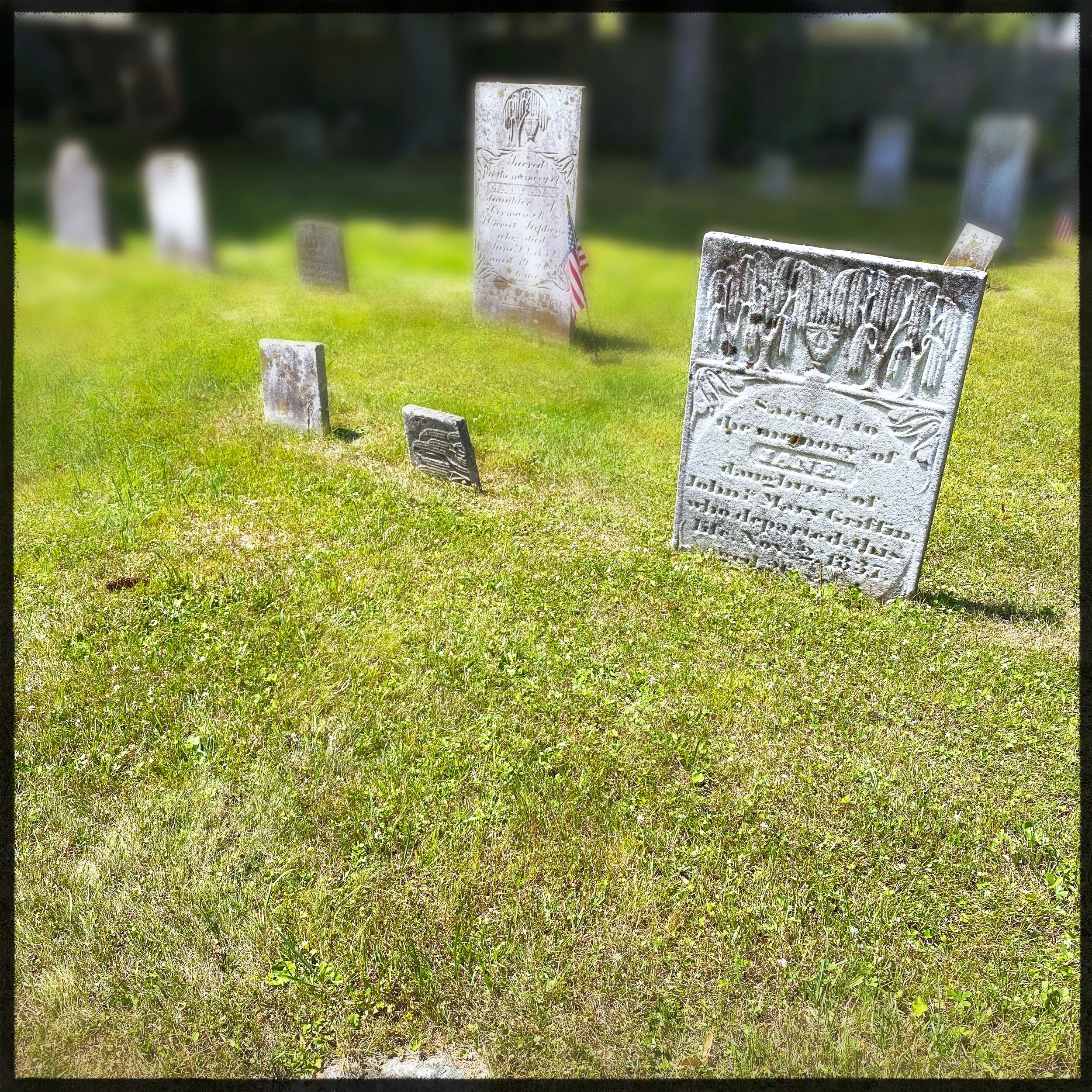
Memento mortem, scriptor!
It’s Halloween, which reminds us all that death is a thing! Sometimes those who die are writers, which raises an interesting dilemma. In the US and other countries, the copyright on the work of a creative person survives 70 years past their death. That’s both good and bad. Good because their immediate family can still profit off their books, stories, poems, music, what-have-you, after the creative person has died. Bad because it takes a lot of work to successfully manage the copyrights of even one creative person until that 70 years is up. If the copyrights stay in the author’s family, it means that they will most likely last until the author’s great-grandchildren are adults. That brings with it a host of challenges, which I talk about in my post for SleuthSayers, the mystery blog today.
The post is entitled:
Writers Only Die Twice!
Here’s just a taste of what I’m saying:
…by making the very selfish decision to drop dead, you must now entrust your precious copyrights to a succession of humans, who now include your children, grandchildren, and great-grandchildren. In a sense, by trusting family, you are placing bets that they will not a) die young, or b) turn out to be a gaggle of glue-sniffing squish-heads. Furthermore, you are trusting that this lineage will have the publishing acumen when the time comes to see that your work a) stays in print, and b) is exploited properly. (In these cases, the verb exploited is a good thing.)
What if your progeny don’t care about writing—yours or anyone’s? Who can blame them? You know how some writers say that they “just want to write”? What if your successors just want to sell tires, clean teeth, do taxes, or a million other things sane people do for a living? Why should they be saddled with intellectual property that has no meaning for them?
I have now presided over or witnessed the disposition of five family estates. What sticks in my mind is how much pressure executors get—from the state, from lawyers, from siblings—to wrap this thing up already. Everyone wants the decedent’s possessions sold, donated, dumped, disappeared, and converted to cash. No one likes paying for storage facilities longer than they have to. Everyone has jobs and families to get back to.
The thought that some loved one or dear friend will have the time or energy to page through every single hard-copy or digital document to catalog your writing stretches the meaning of love—but that is exactly what a devoted literary executor must do.
Or—call me crazy—what if you don’t have kids?
I’m not gonna lie; it’s a meaty article, one of the longer ones I’ve written for this site. I don’t apologize for that: It’s an important topic with no right answers.
Ideally, authors would establish a literary trust in their wills that will be responsible for managing the copyrights. That trust would be made up of an odd number of people (odd so members can break tie votes). As members of the trust retire, age out, or die, the members would be empowered to invite, elect, or appoint new members. This all sounds great but the reality is, if the trustees are presiding over a bunch of copyrights that generate zero to little income annually, they might feel a strong compulsion to just let the trust dissolve. Why, after all, should they keep wasting their time?
The smartest thing heirs can do is keep the books in print in as many editions as possible. At this time in history, the easiest forms are ebooks, paperback, hardcover, and audiobooks. They might change in the future, but that’s what we’ve go right now. Byond that, they ought to have a website—if they still exist a hundred years from now—so the estate has a way to connect with the outside world.
Every book I’ve read on the topic raises a lot of the important issues but no one lays out a great solution in a satisfying manner. I mention four books that I think will give any author a good head start. They are as follows. And yes, these are all affiliate links:
Estate Planning for Authors: Your Final Letter (and why you need to write it now), by M.L. Buchman.
An Author’s Legacy: A Planner to Ensure An Author’s Life Lives On, Long After Death, by Craig Martelle.
The Author Estate Handbook: How to Organize Your Affairs and Leave a Legacy, by M.L. Ronn.
The Author Heir Handbook: How to Manage an Author Estate, by M.L. Ronn.
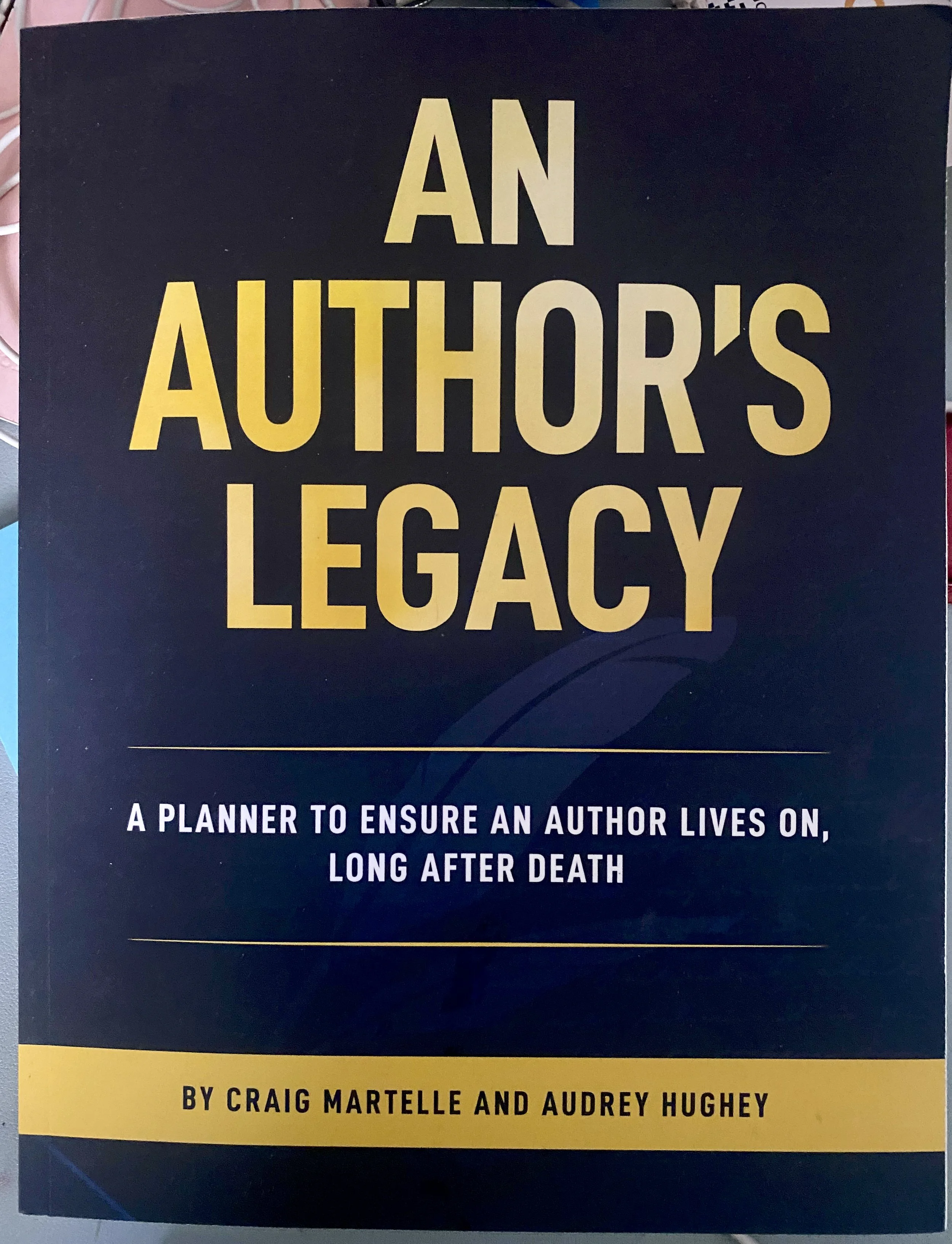
Click image to be taken to the book.
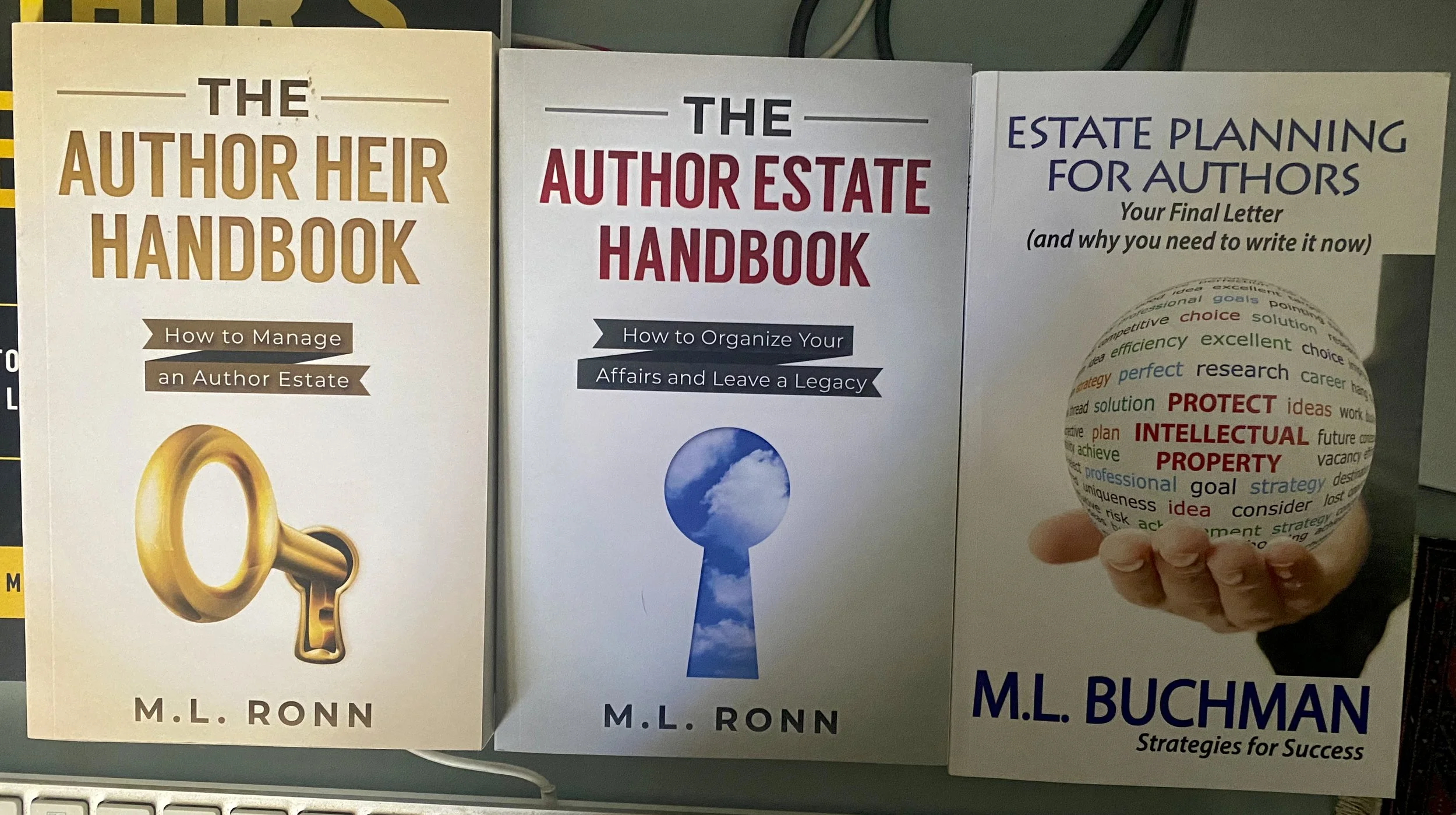
Yep—books by two different writers who go by M.L. What are the chances?
I usually try to mention one of my books when I post here. Preferably, one that fits the topic I’m writing about. My bookshop mystery fits the bill today. (It’s about murder, ain’t it?) I hope you’ll check out my cozy mystery, Murder on Book Row, (affiliate link) which has a great new cover.
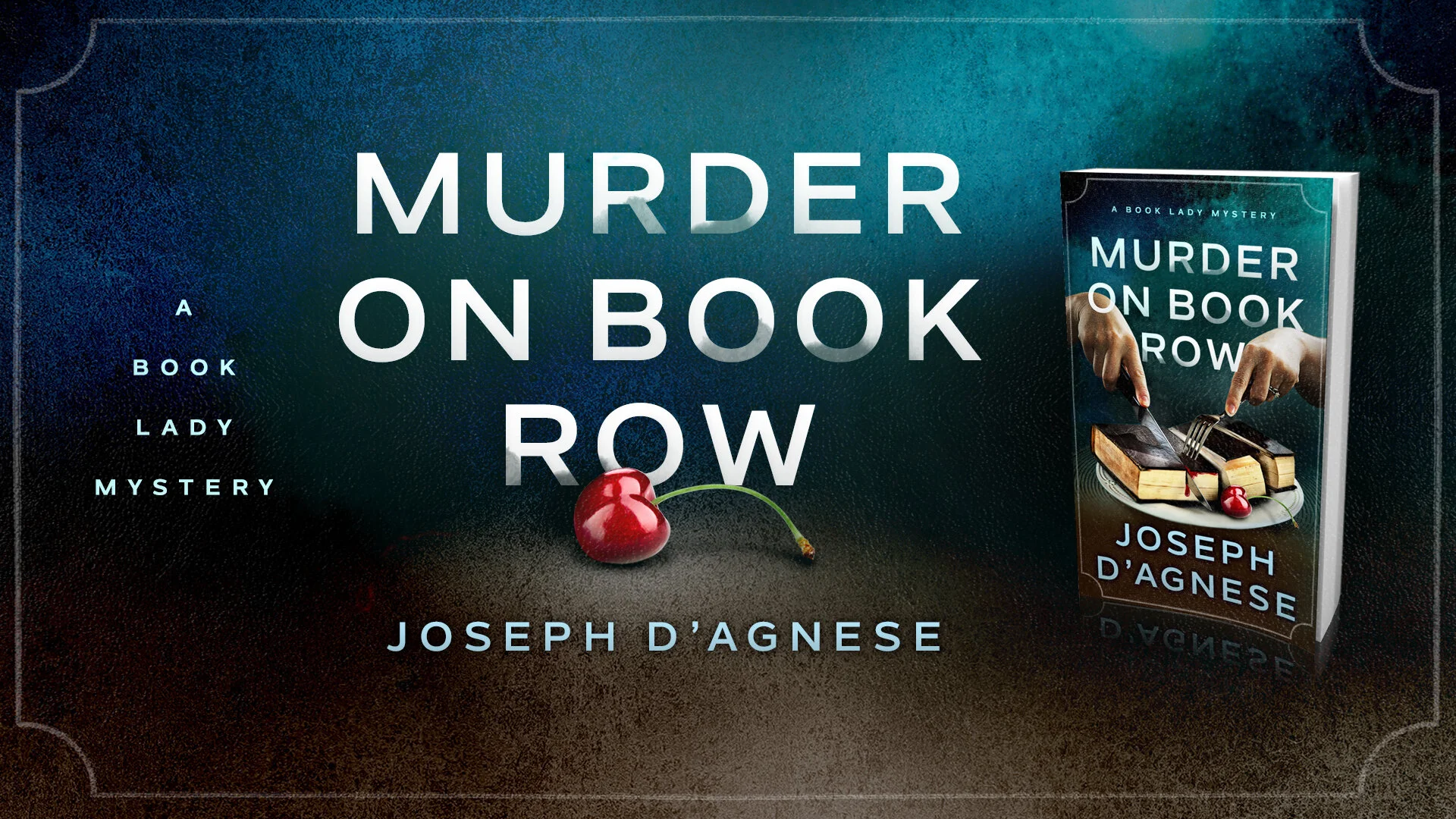
Click to see buying options.